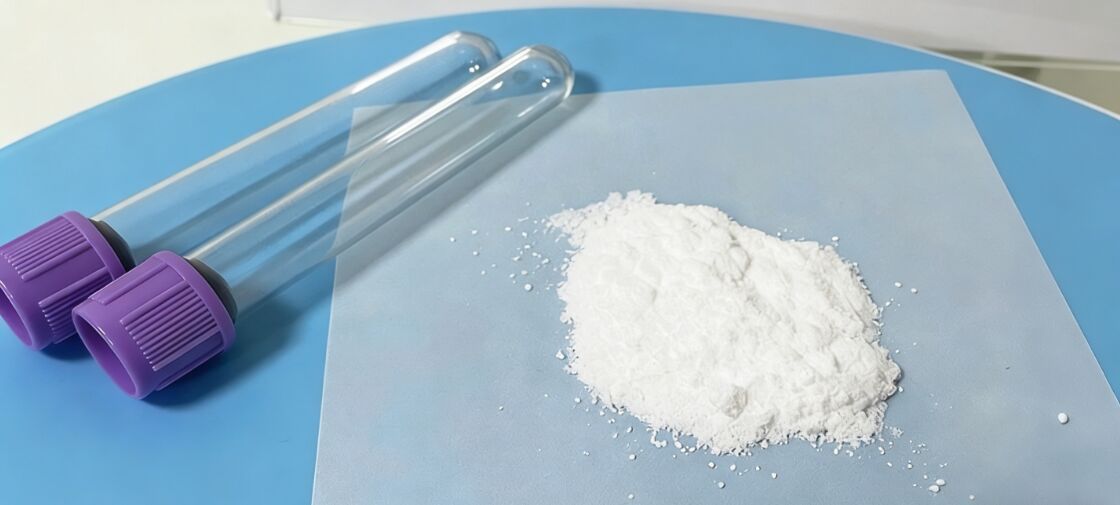
Dipotassium EDTA is widely used in clinical blood tests and routine hematological examinations.
It can protect cellular components of blood to a certain extent, and is commonly used for blood cell counting, platelet separation and testing, and other related items.
Dipotassium EDTA is very practical in biochemical experiments.
Its anticoagulant mechanism is to chelate with calcium ions or other divalent ions in blood samples, thereby blocking the cofactor function of these ions in thrombin formation and preventing blood coagulation.
Dipotassium EDTA is not suitable for the determination of calcium ions, potassium ions and other items.
Since dipotassium EDTA itself contains potassium ions, it will lead to falsely high potassium levels in blood samples during relevant testing.
Because dipotassium EDTA can chelate divalent ions such as calcium ions in blood samples and reduce their concentration,
it is not suitable for all biochemical test items.
To ensure accurate test results, a more appropriate anticoagulant should be selected according to different testing items.